Role
Instructional Designer, E-Learning Specialist, Curriculum Developer
Tools
MS Office (Word, PowerPoint), Box Inc., Adobe Photoshop, Canva, Articulate Suite (Rise & Storyline), Camtasia, Vyond, Zoom
Need
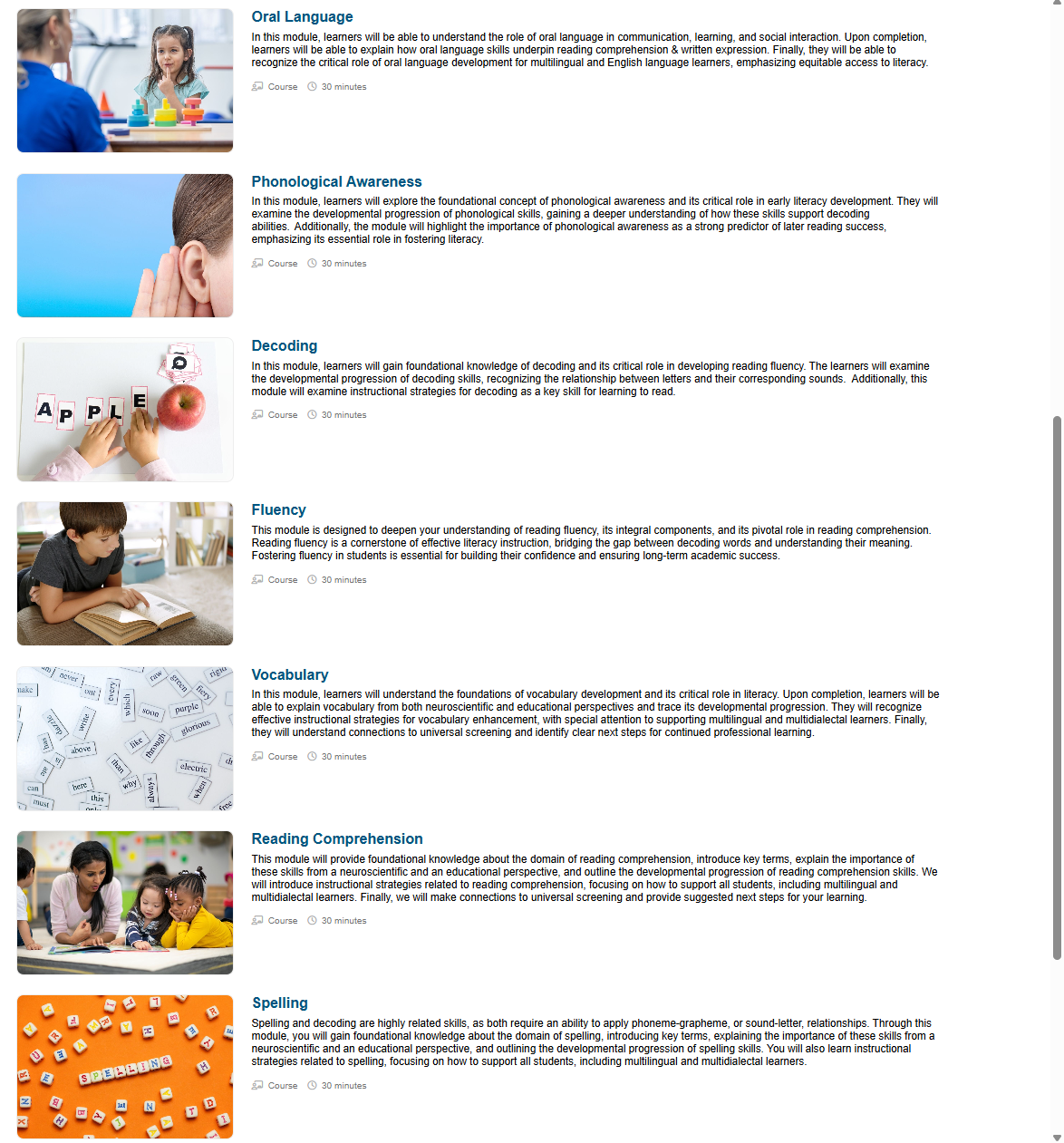
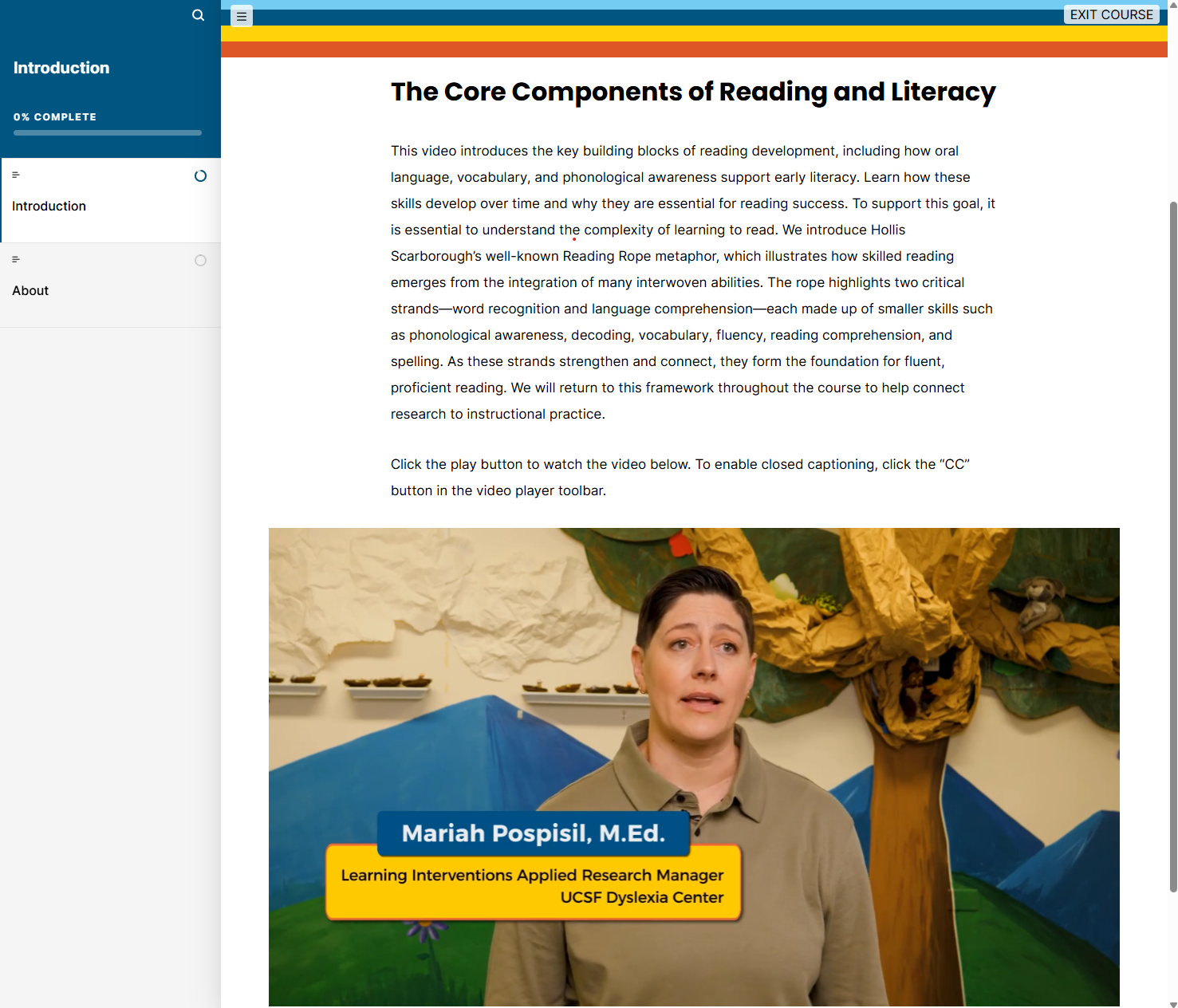
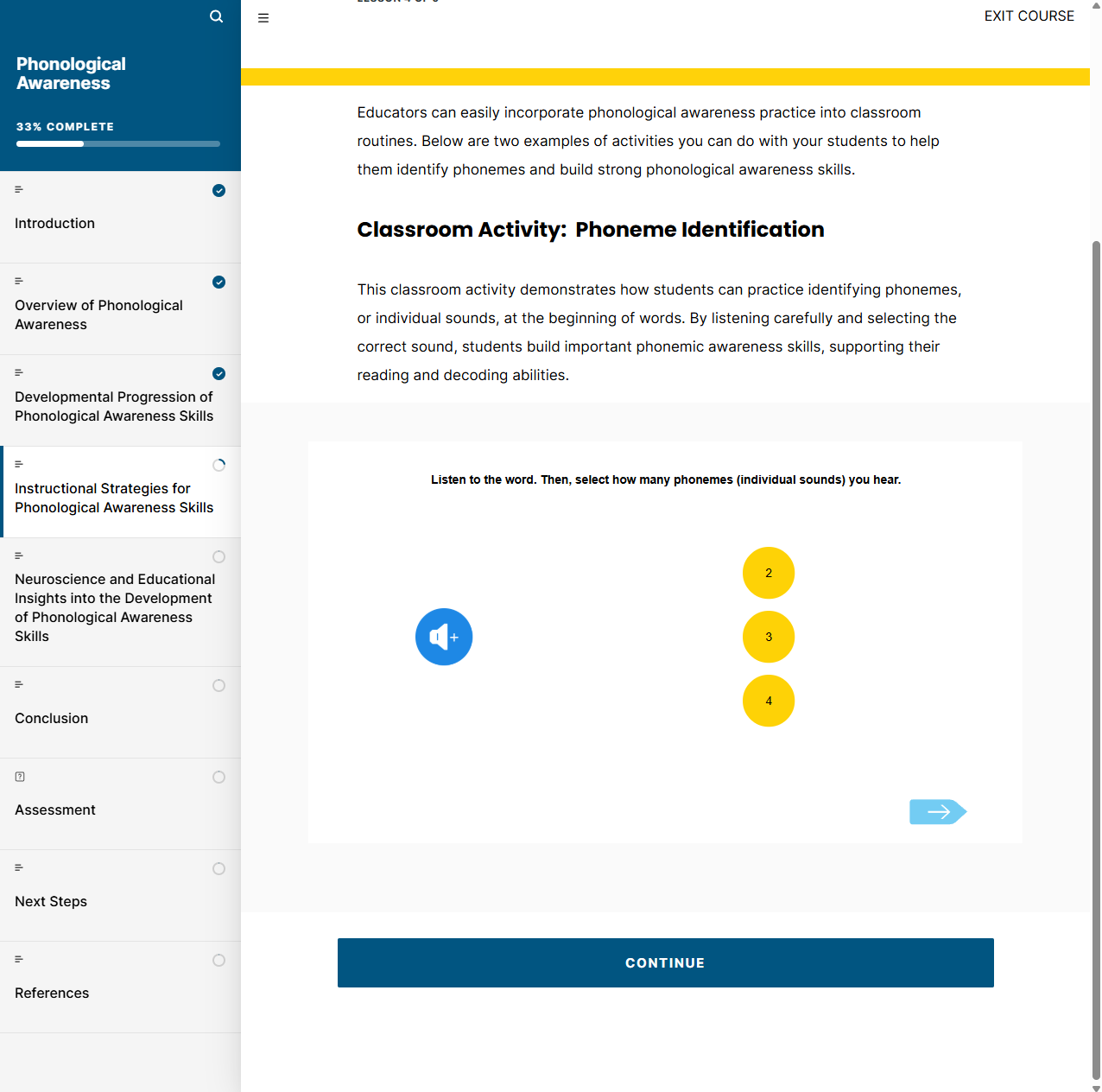
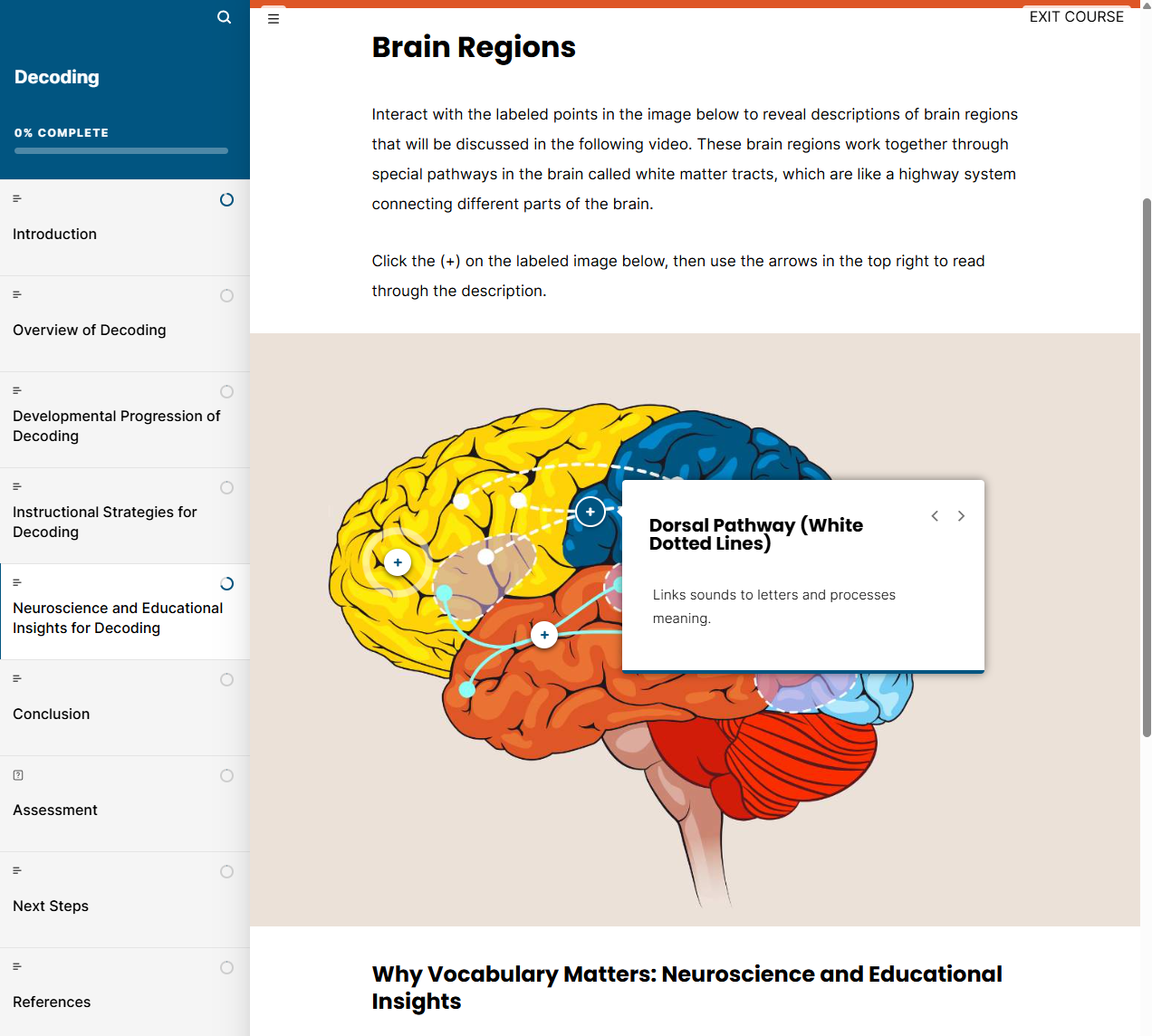
Educators need a strong, research-based foundation in how children learn to read, and many are unsure how to translate that science into daily instruction. This is especially true for supporting multilingual, English learner, and multidialectal students, who deserve equitable access to literacy. Teachers needed a clear, accessible way to understand the key terms, the neuroscience behind reading, and the developmental progression of each skill, as well as how these skills connect to universal screening. The Core Components of Reading series responds to this need with seven modules: Spelling, Oral Language, Phonological Awareness, Decoding, Fluency, Reading Comprehension, and an Introduction to the full series. Together, they help educators understand not just what to teach, but how to reach the diversity of learners in their classrooms.

Solution
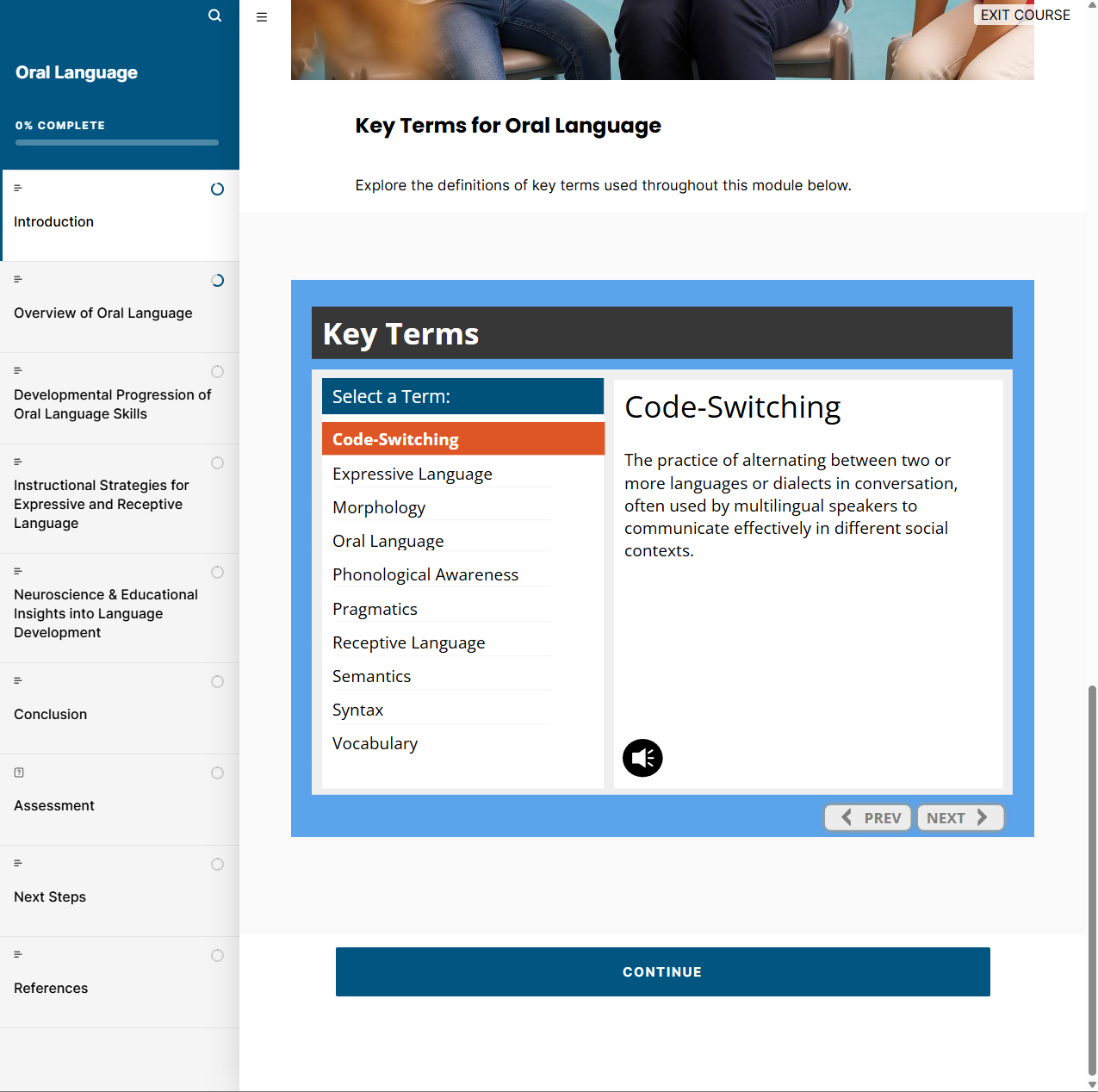
I contributed to the Reading Comprehension module as part of the Core Components of Reading series, a set of research-based courses on early literacy development. The module gives learners foundational knowledge of reading comprehension, introduces key terms (phonological awareness, vocabulary, syntax, morphology, semantics, and pragmatics), and explains why these skills matter from both a neuroscientific and an educational perspective. It outlines the developmental progression of reading comprehension skills in children and introduces instructional strategies, with a focus on supporting all students, including multilingual and multidialectal learners. It also connects to universal screening and suggests next steps for continued learning. The module is aligned to TPE 7 and centers equity and instructional strategies.
Results
Learners who complete the module can define critical reading comprehension terms, explain why comprehension matters for all students (especially multilingual and English learners), analyze how comprehension skills develop in children, and apply instructional strategies in their classrooms. Because the module connects to the other six, educators gain a cohesive, research-informed view of early literacy rather than isolated skills. The project strengthened my ability to turn complex research in neuroscience and literacy into clear, equity-centered learning that supports real-world classroom practice.

