Role
Instructional Designer, E-Learning Specialist, Curriculum Developer
Tools
MS Office (Word, PowerPoint), Box Inc., Adobe Photoshop, Canva, Articulate Suite (Rise & Storyline), Camtasia, Vyond, Zoom
Need
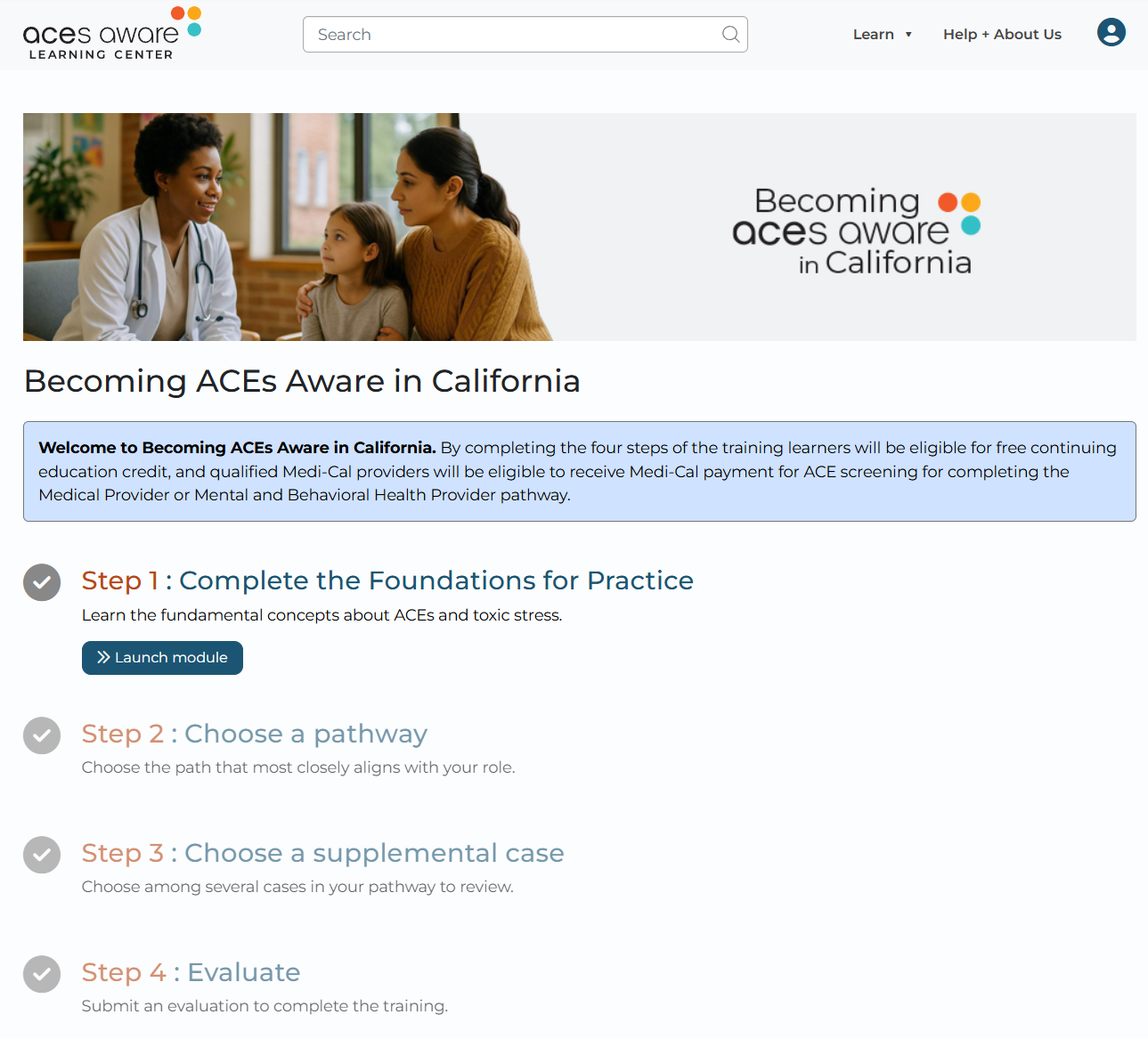
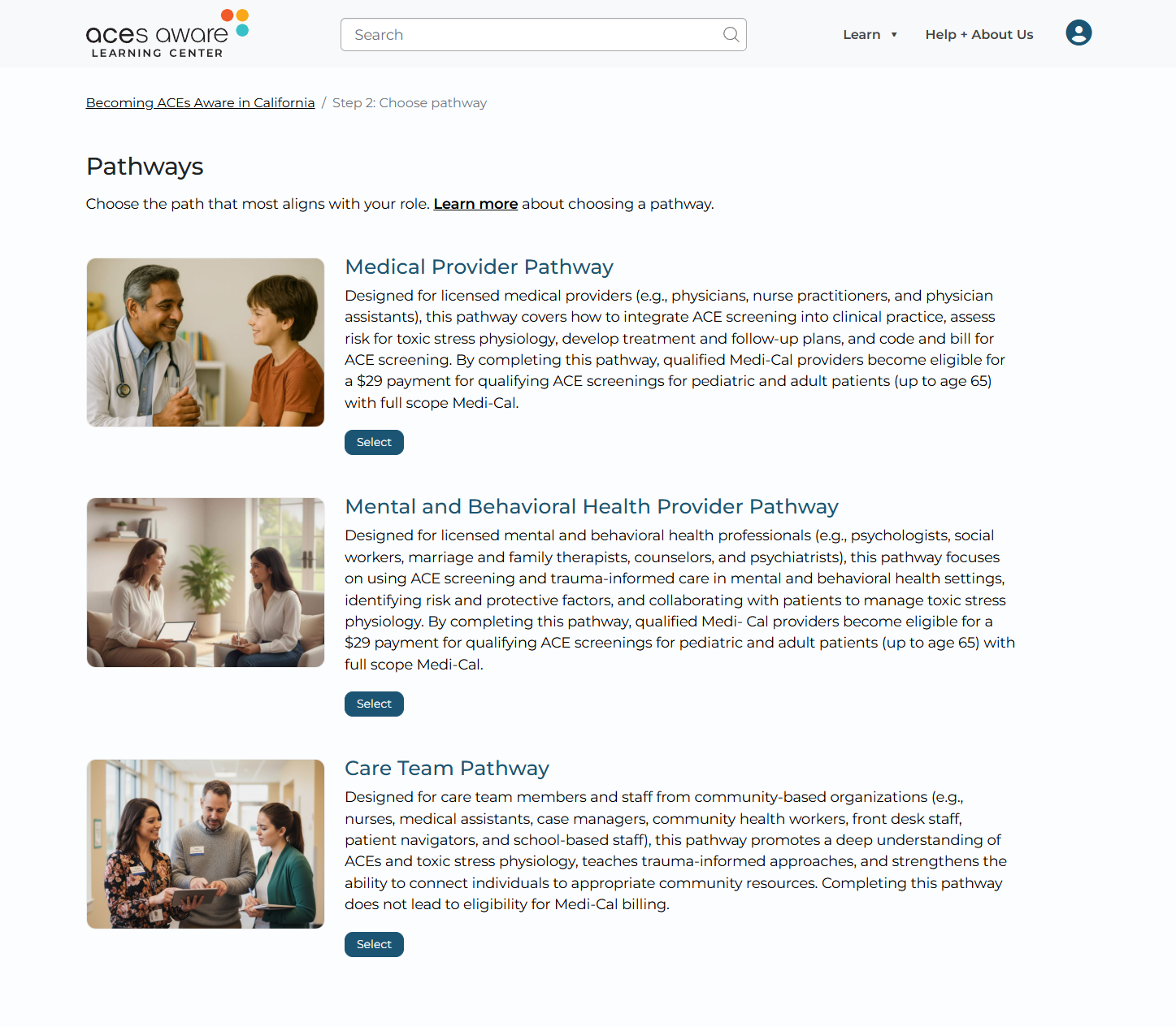
The original Becoming ACEs Aware course needed a refresh to reflect current science and to meet learners where they work. Many providers were unsure how to introduce ACE screening and toxic stress risk assessment into clinical care, how to tailor care to their specific role, and how to meet Medi-Cal requirements for payment. There was also a growing need for Spanish-language training, since more of the patients and communities California providers serve are Spanish-speaking. For the 2.0 version, we built a foundational module that lets learners choose their own path by role (medical provider, mental and behavioral health provider, or broader care team). Each path shows how ACEs Aware training fits their needs and how to apply it in their own practice.
Languages Available:
English and Spanish
Solution
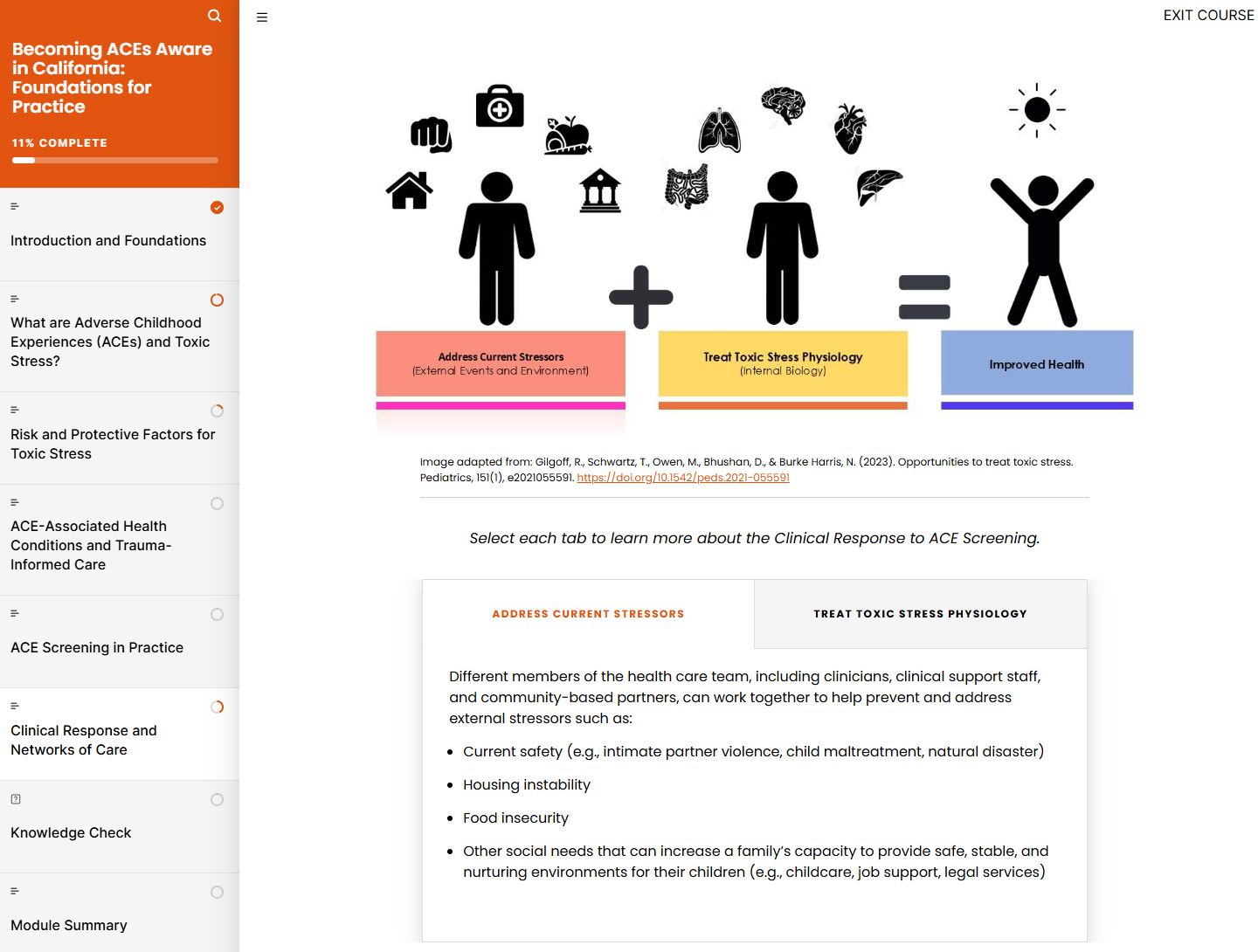
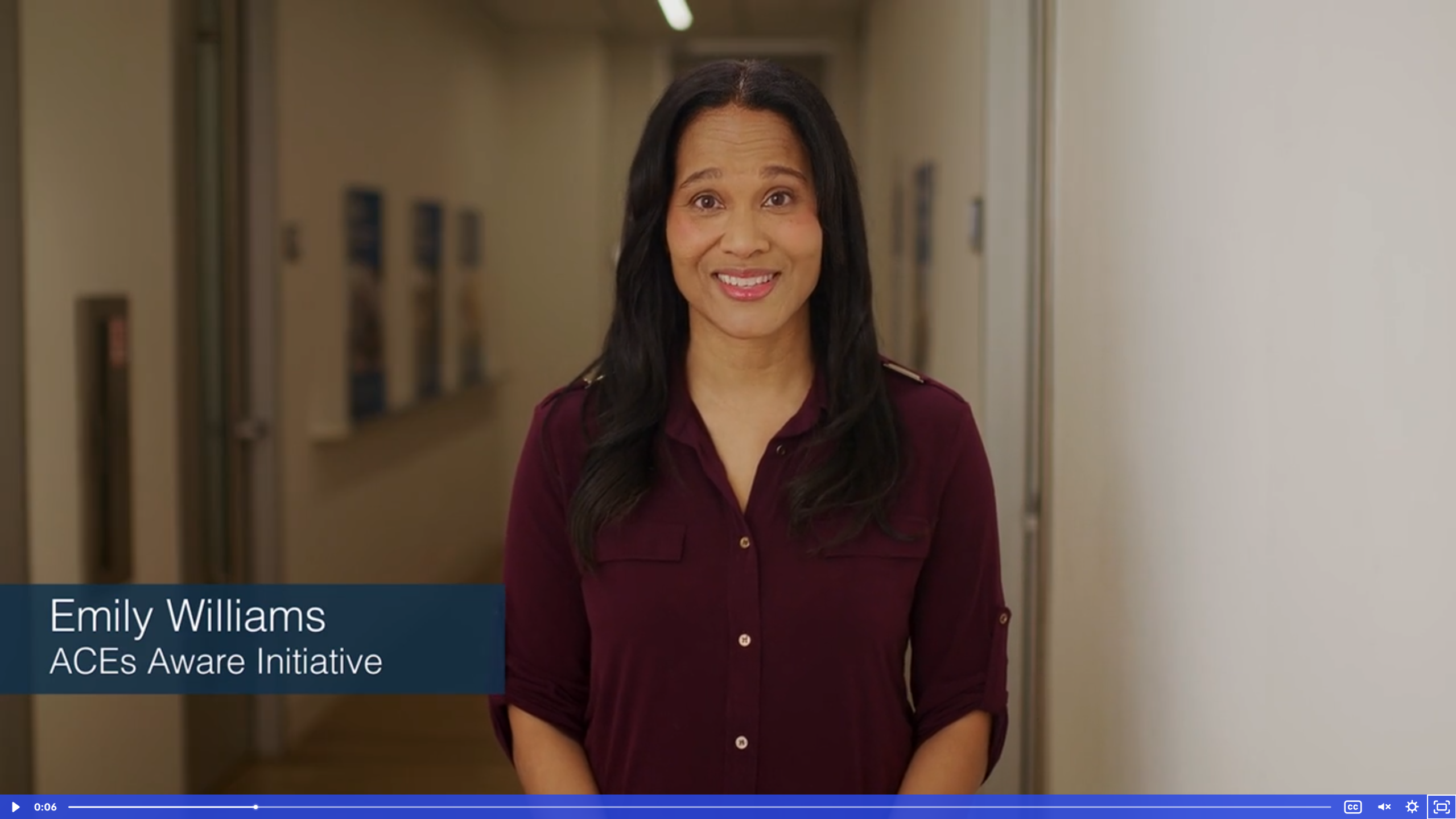
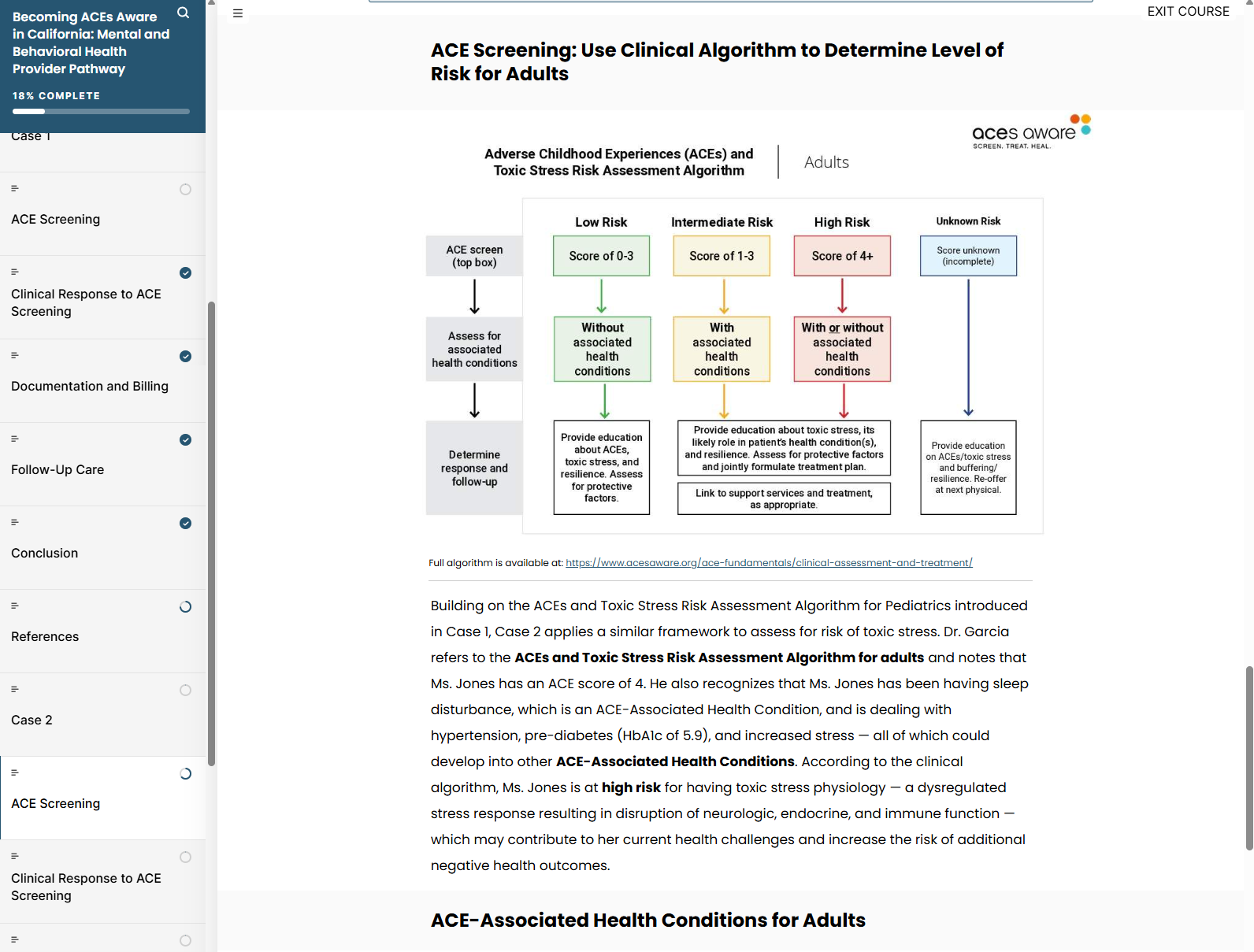
As curriculum developer and instructional designer, I contributed to the Foundational Module and the Medical Pathway of the revamped Becoming ACEs Aware in California training, a free, two-hour online course that covers ACEs, toxic stress physiology, ACE screening, toxic stress risk assessment, and trauma-informed care, and teaches evidence-based strategies to prevent and mitigate toxic stress. The 2026 update added tailored learning pathways for medical providers, mental and behavioral health providers, and care team members. To make the content engaging and practical, the course includes interactive scenarios where learners practice applying what they have learned, as well as videos with actors demonstrating common clinical scenarios, so learners can see trauma-informed screening and conversations in action. Dr. Nadine Burke Harris also addresses the ACEs Aware Initiative, giving learners context for the purpose and vision behind the work. To respond to the rise in Spanish-speaking needs, the Foundational Pathway is also available in Spanish.
Results
The role-based design gives learners a more relevant, self-directed experience and a clearer picture of how to apply ACE screening in their own settings. Interactive scenarios and actor-led videos help translate concepts into practice, and the Spanish Foundational Pathway expands access for Spanish-speaking learners. Providers who complete the medical or mental and behavioral health pathway and submit their NPI information become eligible for Medi-Cal payment for qualifying screenings, which removes a financial barrier to adoption. The project strengthened my ability to turn complex clinical and policy content into engaging, accessible, role-specific training that supports real-world practice change.

